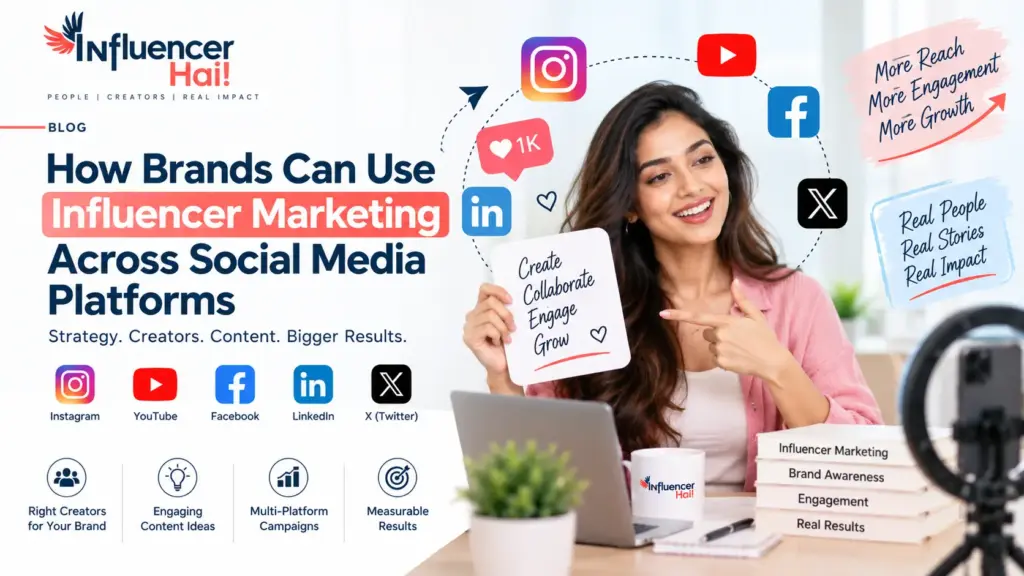
Social media has become the main stage for how brands connect with customers, and social media influencer marketing sits right at the center of it. Instead of talking at an audience through traditional ads, brands now work with creators who already have that audience’s trust, and let them tell the story instead.
But different platforms work in different ways, and a strategy that works on Instagram will not automatically work on YouTube. This guide breaks down how brands can actually use influencer marketing across social media, platform by platform, so campaigns feel native to each channel instead of forced.
A few years ago, influencer marketing was mostly a single sponsored post. Today, it is a full strategy spread across multiple platforms, content formats, and creator types.
Audiences trust creators more than brand accounts. People scroll past traditional ads, but they stop for a creator they already follow and trust. This is the entire reason influencer collaborations work better than most other digital advertising formats right now.
Every platform has its own culture. Instagram, YouTube, and other platforms all have different content styles, audience expectations, and algorithms, which means a single piece of content rarely performs the same way everywhere.
AI-powered influencer marketing has made this easier to manage. Brands can now find the right creators for each platform faster, using data on audience fit and engagement quality instead of guessing based on follower count alone.
Working with an experienced influencer marketing agency helps brands navigate these differences instead of running one generic campaign and hoping it works everywhere.
Instagram remains the go-to platform for most brands. Instagram influencer marketing works well for visual storytelling, Reels for discovery, and Stories for quick, authentic-feeling content. It is usually the strongest starting point for lifestyle, fashion, food, and beauty brands.
YouTube is built for trust and depth. YouTube influencer marketing works best for tutorials, in-depth reviews, and long-form storytelling, content types that need more than 30 seconds to make their point. Tech influencers in particular thrive here, since detailed product reviews and comparisons perform far better in long-form video than in a quick Reel.
Facebook still holds relevance for certain demographics and local, community-driven campaigns, especially in regions where Instagram adoption is lower.
Emerging short-form platforms continue to grow, and short, trend-driven content works well for brands targeting younger audiences who want fast, entertaining content over polished production.
The right platform depends entirely on the audience a brand is trying to reach, not which platform is trending in general.
Not every campaign needs a straightforward sponsored post. Some of the strongest-performing formats right now include:
Creator marketing works best when the content still feels like something the creator would post anyway, just with the brand woven in naturally.
Nano influencers, typically under 10,000 followers, offer the highest trust and engagement, and are often the most cost-effective option for brands testing a new platform or audience.
Micro influencers, usually between 10,000 and 100,000 followers, strike a strong balance between reach and authenticity, making them a popular choice for most social media influencer marketing campaigns.
Macro and celebrity influencers bring wider reach and brand awareness. In India, celebrity endorsement in India still plays a strong role for big product launches, though it usually works best when paired with smaller creators for authenticity at the ground level.
Choosing the right mix, rather than picking one tier for the entire campaign, is often what separates a campaign that performs from one that just spends a lot of budget for reach alone.
Start with a clear goal. Awareness, engagement, and conversions each call for a different platform, creator tier, and content format.
Match the platform to the goal. Instagram and short-form video generally drive awareness and engagement fastest, while YouTube tends to support consideration and purchase decisions with more detailed content.
Write a brief that leaves room for authenticity. Overly scripted content usually underperforms compared to content where the creator has room to use their own voice.
Decide on paid amplification. Boosting strong-performing influencer content as paid ads is one of the most effective ways to extend a campaign’s reach beyond a creator’s organic audience.
Track platform-specific metrics. Engagement rate on Instagram, watch time on YouTube, and click-throughs all tell a different part of the story, and a good influencer marketing campaign tracks each one rather than relying on a single generic number.
Treating every platform the same. Reusing the exact same content across Instagram, YouTube, and other channels usually underperforms compared to content built for each platform’s format and audience.
Over-scripting content. When creators are handed a rigid script, the content loses the authenticity that made social media influencers effective in the first place.
Chasing follower count over engagement. A smaller, highly engaged audience often outperforms a larger, less engaged one, especially with nano and micro influencers.
Not repurposing content. Strong influencer content can often be reused across paid ads, email, and other channels, and many brands miss this extra value entirely.
As an influencer marketing agency India brands trust for platform-specific strategy, InfluencerHai helps match brands with the right creators, on the right platform, for the right goal. Our team combines AI-powered influencer marketing tools for creator discovery with hands-on campaign management, so every campaign is backed by both data and real strategy.
Through our influencer marketing services, we manage everything from creator sourcing and negotiation to content approval and final reporting. For brands that want authentic, creator-shot content beyond traditional sponsored posts, our UGC content agency offering supports that alongside influencer campaigns. And for brands looking to extend results further, our performance marketing agency team helps turn top-performing influencer content into paid ads that keep driving results long after the organic post has run its course.
Whether you are running your first campaign or scaling an existing creator program across multiple platforms, a strategy built around each platform’s strengths is what actually drives results.
One of the biggest shifts in social media influencer marketing is moving away from single, isolated posts and toward a coordinated content calendar across platforms. Instead of running one Instagram post and calling it a campaign, brands are now planning how the same core message shows up differently across channels over several weeks.
A simple version of this might look like an Instagram Reel introducing a product, followed by a YouTube video going deeper into how it works, with Stories and short clips filling the gaps in between to keep the campaign visible without repeating the exact same content everywhere.
This approach also makes it easier to work with a mix of creators. A lifestyle influencer might handle the Instagram side of a campaign, while a tech influencer covers the same product in a detailed YouTube review, giving the brand two different angles that reach two different audience mindsets, one scrolling casually, one actively researching before a purchase.
Planning this way from the start, rather than deciding platform by platform as the campaign goes, tends to produce far more consistent results and makes it easier to track which platform and content type is actually driving performance.
Running a campaign across several platforms at once used to mean juggling separate spreadsheets, separate creator lists, and separate performance reports for each channel. AI-powered influencer marketing tools have made this significantly easier to manage in one place.
Modern platforms can now track creator performance across Instagram, YouTube, and other channels side by side, making it simple to see which platform is actually driving the best results for a specific campaign goal. AI tools also help with creator discovery across platforms at once, instead of manually searching each platform separately.
For brands running larger campaigns with dozens of creators across multiple platforms, this kind of centralized, AI-assisted management is often the difference between a campaign that stays organized and one that becomes difficult to track halfway through.
Influencer marketing works best when it is built around each platform’s strengths, not forced into a single format across every channel. From Instagram influencer marketing to YouTube tutorials, the brands seeing the strongest results are the ones matching the right creators, content, and platform to their actual goals.
If you are ready to build a social media influencer marketing strategy that works across platforms, get in touch with InfluencerHai and let our team help you find the right approach for your brand.