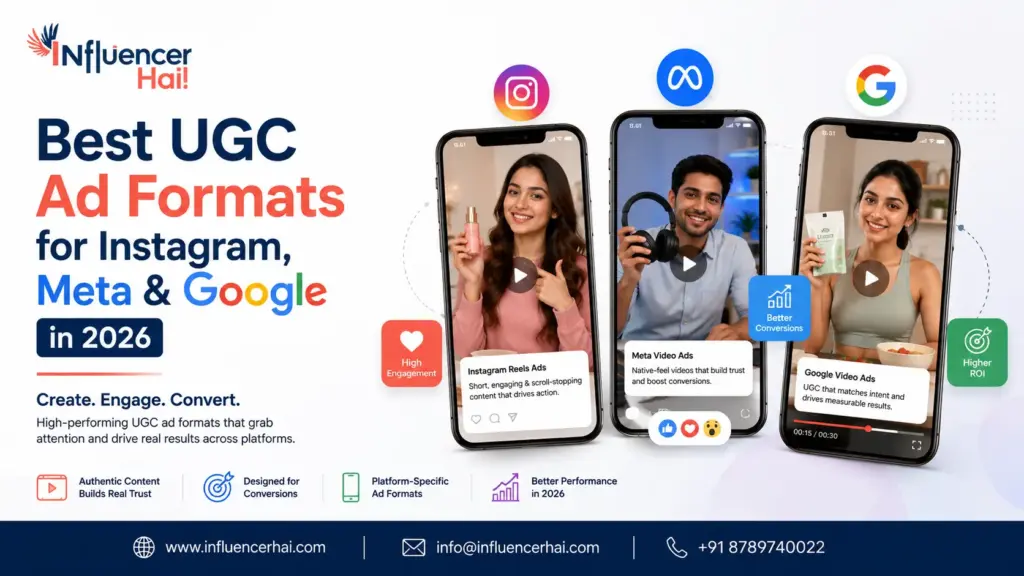
Choosing the right UGC ad format is often the difference between a video that gets skipped and one that stops the scroll. Not every UGC video works the same way across platforms, what performs well on Instagram Reels does not always translate to a Google Ads placement. This guide breaks down the best UGC ad formats for Instagram, Meta, and Google in 2026, and why each one works where it does.
A UGC video is considered ad-ready when it meets three conditions: it hooks attention within the first three seconds, it clearly shows the product without feeling scripted, and it fits the technical specs of the platform it will run on. A video that only checks one or two of these boxes usually underperforms, even if the content itself looks good on its own. Since ad-ready content often costs more than organic-only content, it also helps to budget correctly using our UGC content pricing guide before commissioning a shoot.
Instagram and Meta ad placements reward content that blends into the feed rather than interrupting it. The following formats consistently perform well:
Unboxing and first-impression videos. A creator opens a product on camera and reacts in real time. This format works well because it mimics the natural curiosity of scrolling through a friend’s story, making it feel organic rather than promotional.
Testimonial-style videos. A creator speaks directly to camera about their experience with the product over time. This format builds trust quickly, especially for categories like skincare, wellness, and finance apps, where credibility matters more than excitement.
Comparison and before-after videos. These show a clear transformation or a side-by-side comparison against another option. This format performs especially well as paid ad creative because it answers a question the viewer is often already asking themselves.
Day-in-the-life integration. The product appears naturally within a creator’s daily routine instead of being the sole focus of the video. This format feels the least like an ad and often earns the highest organic engagement, which also tends to lower cost-per-click when boosted as a paid ad.
Google’s ad ecosystem, particularly YouTube Shorts and Display placements, tends to favor slightly more explanatory content, since viewers on these placements are often further along in their research.
Tutorial and how-to demos. A creator shows exactly how to use the product step by step. This format works well on YouTube Shorts because viewers are frequently searching with intent to learn, not just to be entertained.
Problem-solution hooks. The video opens by naming a common frustration, then shows the product solving it within the first few seconds. This structure aligns well with how Google’s ad algorithm favors clear, fast value delivery.
Short-form vertical explainers. A concise, 15 to 30 second video that explains what the product does and who it is for, optimized for vertical viewing. This format performs consistently across YouTube Shorts and Google Display network placements that support video creative.
| UGC Format | Best Platform | Best Use Case |
| Unboxing/First Impression | Instagram, Meta | New product launches |
| Testimonial-Style | Instagram, Meta | Trust-building for skincare, wellness, finance |
| Comparison/Before-After | Instagram, Meta, YouTube Shorts | Retargeting, decision-stage buyers |
| Day-in-the-Life | Instagram, Meta | Organic-feeling brand integration |
| Tutorial/How-To | YouTube Shorts, Google Display | Products needing explanation |
| Problem-Solution | YouTube Shorts, Google Display | Fast-value, cold-audience ads |
| Short-Form Explainer | YouTube Shorts, Google Display | Quick product introduction |
| Platform | Recommended Length | Format |
| Instagram Reels Ads | 15 to 30 seconds | Vertical, 9:16 |
| Meta Feed Ads | 15 to 60 seconds | Vertical or square |
| YouTube Shorts Ads | 15 to 60 seconds | Vertical, 9:16 |
| Google Display (Video) | 15 to 30 seconds | Vertical or horizontal, platform-dependent |
Keeping content within these ranges helps avoid ads being cut off mid-message or auto-skipped before the key point lands.
A few shifts are shaping how UGC ad formats are evolving this year, and understanding them helps brands stay ahead rather than reacting after competitors adopt them first.
AI-assisted editing, human-led content. Brands are increasingly using AI tools to speed up captioning, hook testing, and rough-cut editing, while keeping the on-camera performance fully human. This keeps production fast without sacrificing the authenticity that makes UGC work in the first place.
Vernacular and regional UGC formats. Creators producing content in regional Indian languages are seeing stronger engagement in specific markets, since a hook delivered in a viewer’s own language and cultural context tends to build trust faster than a generic national approach.
Shoppable UGC integration. Both Instagram and YouTube are pushing tighter integration between video content and direct purchase actions, meaning UGC formats that clearly show a product in use are increasingly paired with in-video shopping tags rather than relying only on a link in bio or description.
Multi-format repurposing from a single shoot. Instead of briefing a creator for one specific ad, more brands are requesting two or three format variations from the same shoot, an unboxing cut, a testimonial cut, and a short explainer cut, so the content can be tested across Instagram, Meta, and YouTube Shorts without booking separate shoots for each platform.
Matching format to goal is often more important than matching format to platform alone. A brand focused purely on awareness should lean toward day-in-the-life or unboxing formats, since these feel the most native and are less likely to be perceived as an ad. A brand focused on direct conversions should lean toward comparison or problem-solution formats, since these give viewers a clear reason to act immediately. Retargeting campaigns benefit most from testimonial-style content, since the audience already knows the brand and simply needs reassurance before completing a purchase. Thinking through the goal first, then picking the format, tends to produce better results than picking a trendy format and hoping it fits the objective.
For brands managing this across multiple platforms and creators, working with an experienced influencer marketing agency helps keep format testing, creative briefs, and platform specs consistent instead of managed ad hoc across different vendors.
There is no single best UGC ad format that works everywhere. What works on Instagram often needs adjusting for YouTube Shorts, and what performs on Google Display may feel out of place in a Meta feed. The brands that get the best results are the ones that match format to platform and funnel stage, then keep testing rather than settling on one approach permanently. Once a UGC creator pipeline is in place, choosing and testing the right formats becomes the next lever for improving ad performance. If you’re ready to build a UGC ad strategy that actually fits each platform, get in touch with our team at InfluencerHai and we will help you plan, produce, and test the right formats for your brand.