
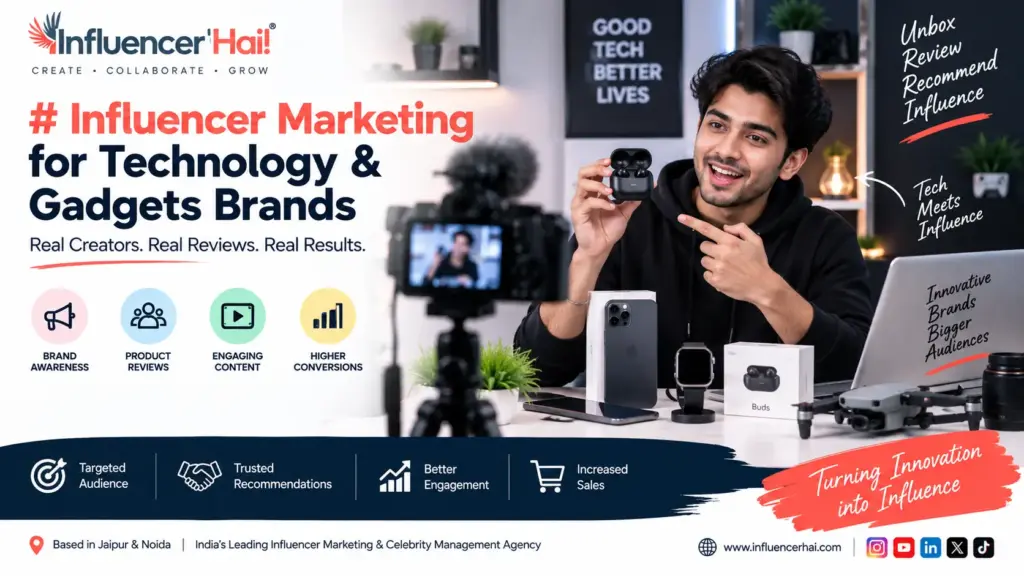
Before buying a new phone, smartwatch, or smart home device, most people do the same thing: they search for a review. Not a spec sheet from the brand’s own website, but a real person’s honest take, ideally someone who has actually used the product for more than five minutes. This single habit is exactly why tech influencer marketing has become one of the most effective channels for gadget and technology brands in India.
Unlike categories that rely mostly on emotional appeal, tech buyers want proof. They want to see the product actually working, hear someone compare it honestly to alternatives, and watch it survive everyday use before they trust it enough to spend money. As an influencer marketing agency working across multiple categories, we’ve seen this trust-first behavior make tech one of the strongest-performing verticals for creator content. This guide breaks down how technology and gadget brands should approach influencer marketing, from picking the right creators to measuring what actually matters.
Technology products are inherently demo-friendly. A gadget can be unboxed, tested, and compared on camera in a way that a service or an abstract product simply cannot be shown as clearly. This makes technology influencer campaigns naturally suited to video content, where audiences can actually see the product in action before deciding whether it’s worth their money.
There’s also a trust gap that influencer marketing fills particularly well in this category. Buyers are often skeptical of brand-published specs and marketing claims, but they trust a creator who says “I’ve used this for two weeks and here’s what I actually think.” That third-party validation is often the deciding factor between a sale and an abandoned cart.
“Tech influencer” is too broad a category to search well. The tech and gadget space actually splits into several distinct sub-niches, and picking the right one for your product matters more than picking the biggest account available.
Mobile and gadget reviewers are the best fit for smartphones, wearables, and consumer electronics, since their audience is already primed for detailed, comparison-style content.
AI and software explainers suit SaaS products, productivity apps, and AI-powered tools, where the content needs to demonstrate a use case rather than just physical unboxing.
Gaming tech creators work well for gaming laptops, peripherals, and performance hardware, since this audience cares deeply about specs and real-world performance under load.
Smart home and lifestyle tech creators are the strongest fit for smart speakers, home security devices, and connected appliances, framing the product within an everyday lifestyle context rather than a pure spec breakdown.
Matching your product to the right sub-niche creator produces far better results than working with a broad “tech influencer” who covers everything shallowly.
A handful of proven formats consistently perform well for technology influencer campaigns:
Unboxing videos remain one of the highest-performing formats in this category, capturing genuine first impressions as a creator opens and sets up a product for the first time, which audiences find both entertaining and informative. This raw, authentic style is exactly why unboxing content overlaps so closely with what a UGC agency in India typically produces, real, unscripted reactions rather than a polished ad.
Comparison videos pit your product against competitors or a previous model, giving buyers exactly the kind of side-by-side information they’re searching for before making a purchase decision.
Tutorials and how-to content work especially well for software, apps, and more complex tech products, walking audiences through setup and key features they might otherwise find confusing.
“Day in the life” style content shows a gadget integrated into a creator’s actual routine, which builds a more relatable, long-term impression than a single review video. Whatever the format, raw footage from these shoots still needs proper post video production work, editing, color, and platform formatting, before it’s genuinely ready to publish across every channel a launch needs.
Product launch marketing content, timed around a release date, builds anticipation and can drive pre-orders or waitlist signups when paired with the right creators at the right moment.
The right influencer tier depends heavily on what stage your product launch is at. For niche, technical products or early-stage startups, micro and nano tech review creators often deliver stronger results, their audiences are smaller but highly engaged, technically literate, and genuinely trust their recommendations on specific product categories.
For flagship launches, major smartphone releases, or products needing fast, broad awareness, macro influencers and mass-reach creators make more sense, even though they come at a higher cost. Many successful gadget marketing campaigns actually blend both, our guide on choosing the right influencer tier breaks this down in more detail: a macro creator or two for broad launch-day visibility, supported by a wider wave of micro and nano tech reviewers publishing detailed, credibility-building content in the following weeks.
This is one of the most overlooked parts of running influencer marketing for gadget marketing, and one of the easiest ways to run into trouble if ignored. Sponsored tech reviews and comparison content fall under advertising disclosure guidelines, and a few practical rules should be built into every brief:
Brands that build compliance review into the process from the start avoid the far bigger cost of a flagged campaign or damaged creator relationship later.
Views and likes feel good, but for technology influencer campaigns, they rarely tell the full story. Depending on your campaign goal, prioritize:
Engagement rate is still useful as an early signal of how well a creator’s content is landing, but for tech brands specifically, it should be treated as a leading indicator rather than the actual measure of campaign success.
Executing this well, across creator sub-niches, content formats, and compliance requirements, is where most tech and gadget brands benefit from working with an experienced partner. Our influencer marketing service covers the full process for technology brands, sourcing the right creator sub-niche, structuring unboxing and comparison content calendars, managing disclosure and compliance review, and tracking performance against the metrics that actually matter for your launch, rather than treating “tech influencer” as one broad bucket.
Technology and gadget brands have a natural advantage in influencer marketing: products that can be shown, tested, and compared on camera build exactly the kind of trust buyers are looking for before they spend money. The brands that succeed in this category choose creators by sub-niche rather than broad follower count, lean into formats like unboxings and comparisons that buyers are actively searching for, stay compliant with disclosure requirements, and measure success against real launch metrics rather than vanity numbers.
If you’re planning a product launch or an ongoing gadget marketing campaign and want help building a strategy that covers creator selection, content, compliance, and reporting, InfluencerHai’s team can help put the right plan together.