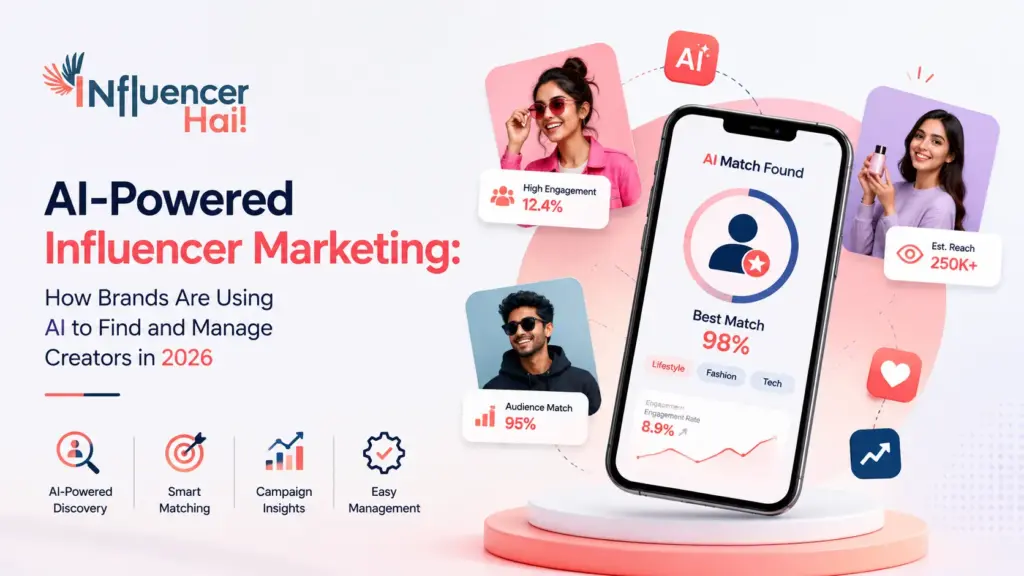
Influencer marketing used to mean scrolling Instagram for hours, checking follower counts by hand, and hoping a creator’s audience actually matched your brand. That process does not scale anymore, and most brands know it. In 2026, AI-powered influencer marketing has become the standard way serious brands find, vet, and manage creators, and the gap between brands using AI and brands still doing everything manually is getting wider every quarter.
This guide breaks down exactly how AI is changing influencer marketing, from creator discovery to campaign management to performance tracking, and how brands can actually use these tools to run better campaigns.
AI in influencer marketing is not a future trend anymore, it is already running in the background of most successful campaigns. Brands that once relied on spreadsheets and manual outreach are now using AI tools to do in minutes what used to take a full team days to complete.
A few reasons this shift is happening so fast:
Scale. A single influencer marketing agency in India might manage dozens of campaigns at once, each with 10 to 50 creators. Doing that manually simply is not realistic anymore.
Fraud and fake followers. Fake engagement and bot followers have made manual vetting unreliable. AI tools can spot unnatural engagement patterns that a human eye would miss.
Better matching. AI influencer marketing tools do not just look at follower count, they analyze content style, audience overlap, and past brand safety history to find creators who genuinely fit a brand, not just ones with big numbers.
Faster decisions. Brands want campaigns live in days, not weeks. AI speeds up nearly every step of the process, from shortlisting creators to drafting outreach messages.
AI creator discovery is where most brands see the biggest time savings. Instead of manually searching hashtags and profiles, AI tools scan through millions of creator profiles and surface the ones that actually match a brand’s criteria.
Here is what modern AI creator discovery typically looks at:
This shift matters most for a social media influencer marketing agency managing multiple brands at once, since it means creator shortlists that used to take days can now be built in hours, with better accuracy than manual research alone.
Finding the right creator is only step one. AI campaign management influencer marketing tools now handle much of what happens after that too, from outreach to content approval to final delivery.
Common areas where AI now supports campaign management:
Automated outreach. AI tools can draft personalized outreach messages at scale, so a campaign involving 30 creators does not mean writing 30 emails from scratch.
Brief generation. Instead of a marketer manually writing a creative brief for every creator, AI can turn campaign goals into clear content guidelines automatically.
Content review. AI can scan submitted content for brand guideline compliance before it ever reaches a human reviewer, saving time on the back and forth that usually slows campaigns down.
Timeline tracking. Managing deadlines across dozens of creators is one of the most tedious parts of running a campaign, and AI tools now handle reminders and status tracking automatically.
For brands working with an experienced influencer marketing services partner, this usually means campaigns launch faster and stay on schedule with far less manual coordination.
AI influencer marketing analytics is where the real value shows up for brands trying to justify their marketing spend. Instead of just reporting likes and comments, modern analytics tools connect creator content to actual business outcomes.
What AI-powered analytics can now track:
This is a major shift from just a few years ago, when most influencer marketing reporting stopped at reach and impressions. Now, brands can see real numbers tied to real results, which makes it far easier to decide where to invest next.
The AI vs manual influencer marketing debate comes up a lot, and the honest answer is that AI does not replace human judgment, it removes the busywork so people can focus on strategy and relationships.
Here is a simple breakdown of where each one fits:
Where AI wins:
Where humans still matter most:
The brands getting the best results in 2026 are not choosing AI or manual work, they are combining both. AI handles the repetitive, data-heavy work, while people handle strategy, creativity, and relationships.
If you are wondering how brands use AI to find influencers in practice, the process usually looks something like this:
This process is faster and more accurate than manual influencer marketing, but it still needs a team that understands strategy, not just software.
As a social media influencer marketing agency, InfluencerHai combines AI-powered creator discovery and analytics with real strategic oversight, so brands get the speed of automation without losing the judgment that makes campaigns actually work.
Our team pairs AI tools with hands-on campaign management, from creator discovery through final reporting, so every campaign is backed by both data and real marketing experience. If your brand also needs authentic, creator-shot content beyond traditional sponsored posts, our UGC content agency offering can support that alongside influencer campaigns. And for brands looking to pair influencer content with paid media, our performance marketing agency team helps turn creator content into measurable, trackable results.
Whether you are exploring influencer marketing services for the first time or looking to modernize an existing creator program, AI-powered tools combined with real strategy is what actually drives results in 2026.
Even with the best AI influencer marketing tools, brands still run into avoidable problems. Knowing these upfront can save a lot of wasted budget.
Trusting AI recommendations without any human review. AI is excellent at narrowing down thousands of creators to a shortlist, but it cannot fully judge brand fit or creative chemistry. Always have a real person review the final shortlist before outreach begins.
Ignoring context behind the data. A creator might score well on paper but not actually be the right cultural or tonal fit for a specific campaign. Numbers tell part of the story, not the whole story.
Treating AI tools as a one-time setup. Creator discovery and analytics tools work best when used continuously, not just at the start of a campaign. Audiences shift, trends move fast, and last month’s perfect creator match might not be this month’s.
Skipping authenticity checks on smaller creators. Brands often assume fraud is only a big-account problem, but fake engagement shows up at every follower tier, including nano and micro influencers. AI vetting matters at every size.
Not connecting AI insights back to strategy. Data is only useful if someone acts on it. Brands that pull analytics reports but never adjust their creator strategy based on them are wasting the tool’s real value.
Avoiding these mistakes is often the real difference between brands that get strong results from AI-powered influencer marketing and brands that just add new software without changing outcomes.
AI-powered influencer marketing is not about replacing people, it is about removing the repetitive work so brands and agencies can focus on what actually moves the needle, strategy, creativity, and relationships. From AI creator discovery to AI influencer marketing analytics, the brands adopting these tools now are building a real advantage over the ones still doing everything by hand.
If you are ready to bring AI-powered strategy into your influencer campaigns, get in touch with InfluencerHai and let our team show you what a modern, data-backed creator marketing program looks like.