Brands today have many ways to reach potential customers. From Instagram posts and social media advertising to influencer campaigns and UGC marketing, businesses can choose from different approaches depending on their goals.
Two strategies that are often compared are influencer marketing and social media marketing. Although both use platforms such as Instagram, YouTube, and Facebook, they work in different ways.
Understanding these differences can help businesses create a more effective digital marketing strategy and decide where to invest their time and budget.
Influencer marketing involves working with creators who have built an audience around a particular niche or interest. Instead of promoting a product only through a brand account, businesses collaborate with creators to introduce their products or services to an established audience.
This approach is also known as creator marketing and can include Instagram influencers, YouTube creators, UGC creators, and celebrities.
Common influencer marketing activities include:
A good influencer marketing strategy focuses on finding creators whose audience, content style, and niche match the brand.
Social media marketing involves promoting a business through social media platforms. Brands create and publish their own content to communicate with customers, promote products, and build a recognizable online presence.
A social media marketing strategy can include:
Unlike influencer marketing, the brand usually controls the content, messaging, publishing schedule, and overall communication.
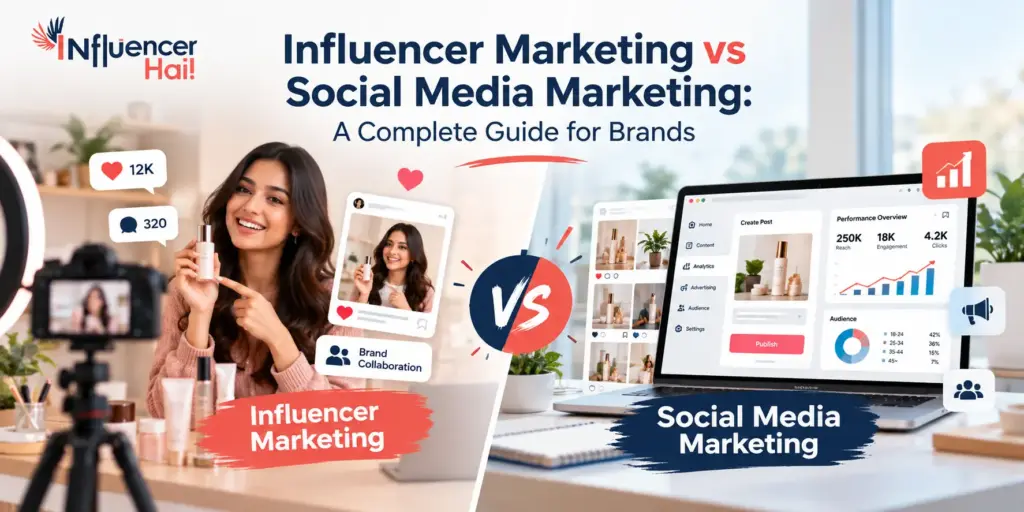
The main difference is who communicates with the audience.
With social media marketing, the brand communicates through its own channels. With influencer marketing, creators communicate with their existing followers on behalf of the brand.
| Factor | Influencer Marketing | Social Media Marketing |
| Main communicator | Influencer or creator | Brand |
| Audience | Creator’s followers | Brand’s audience |
| Content | Creator-led | Brand-led |
| Main approach | Creator marketing | Social media marketing |
| Common formats | Reels, reviews, Stories, videos | Posts, Reels, ads, videos |
| Targeting | Creator’s audience | Platform targeting |
| Key strength | Creator trust and reach | Brand control and consistency |
Both strategies can support audience engagement, brand awareness, website traffic, leads, and conversions.
One major benefit of influencer marketing is access to an existing community.
For example, a skincare company can collaborate with beauty creators whose followers are already interested in skincare products. A fitness brand can work with fitness influencers who regularly create workout and wellness content.
Relevant creators can make brand collaborations feel more natural because the product becomes part of content their audience already consumes.
Influencer campaigns can also generate different types of content, including product demonstrations, testimonials, reviews, Reels, and UGC.
Social media marketing gives businesses greater control over their brand communication.
A company can develop a consistent social media marketing strategy around its products, services, values, and audience.
For example, a business using Instagram marketing can publish Reels, Stories, carousels, product posts, educational content, and customer testimonials.
Social media advertising can further extend this content to specific audiences using platform targeting options.
Influencer marketing and social media advertising can work together.
A brand may first collaborate with creators to produce authentic content and then use selected content in paid campaigns, depending on the agreed content and advertising rights.
This approach can combine creator-led storytelling with the targeting capabilities of paid social media campaigns.
The important point is to establish content usage rights before using creator content for advertising.
There is no fixed cost for either strategy.
Influencer marketing costs can depend on the creator’s audience size, engagement, niche, platform, content requirements, usage rights, exclusivity, and campaign duration.
Social media marketing costs can include content production, social media management, creative development, advertising spend, and agency fees.
Rather than comparing only the price, brands should consider their campaign objectives, target audience, expected reach, engagement, leads, and conversions.
UGC marketing has become an important part of modern digital campaigns.
Brands can work with creators to produce authentic product videos, testimonials, reviews, demonstrations, and lifestyle content. This content can be published on the creator’s profile or, with appropriate rights, used across the brand’s own social media channels and advertising campaigns.
UGC can therefore connect influencer marketing with a broader social media marketing strategy.
Yes. In many cases, businesses can combine influencer marketing and social media marketing as part of one digital marketing strategy.
For example, a new product launch could include:
This creates several touchpoints between the brand and potential customers.
The right approach depends on the business and campaign objective.
If the goal is to build a consistent brand presence, a strong social media marketing strategy can be valuable.
If the goal is to reach an established niche audience through trusted creators, influencer marketing may be more suitable.
For many businesses, using both approaches can create a more complete digital marketing strategy. The brand can maintain its own social presence while using creator marketing to reach new audiences.
InfluencerHai is an influencer marketing agency in India helping brands connect with relevant creators and manage influencer campaigns.
Our services include influencer discovery, campaign strategy, creator collaborations, UGC marketing, celebrity endorsement services, content coordination, campaign execution, and performance tracking.
By combining influencer marketing with social media campaigns and broader digital marketing activities, brands can create campaigns designed around their specific audience and business objectives.
Influencer marketing and social media marketing are closely connected, but they are not the same.
Influencer marketing focuses on creators and their communities, while social media marketing focuses on the brand’s own social presence and communication.
A strong influencer marketing strategy can help businesses access relevant creator audiences, while a consistent social media marketing strategy helps build long-term brand communication.
When combined with Instagram marketing, social media advertising, UGC marketing, brand collaborations, and creator marketing, these strategies can become valuable parts of a broader digital marketing strategy.
The key is to choose the right mix based on your audience, campaign goals, content requirements, and budget.

Tell us your goal. Our team will build the right creator or celebrity plan for your brand.





 250+