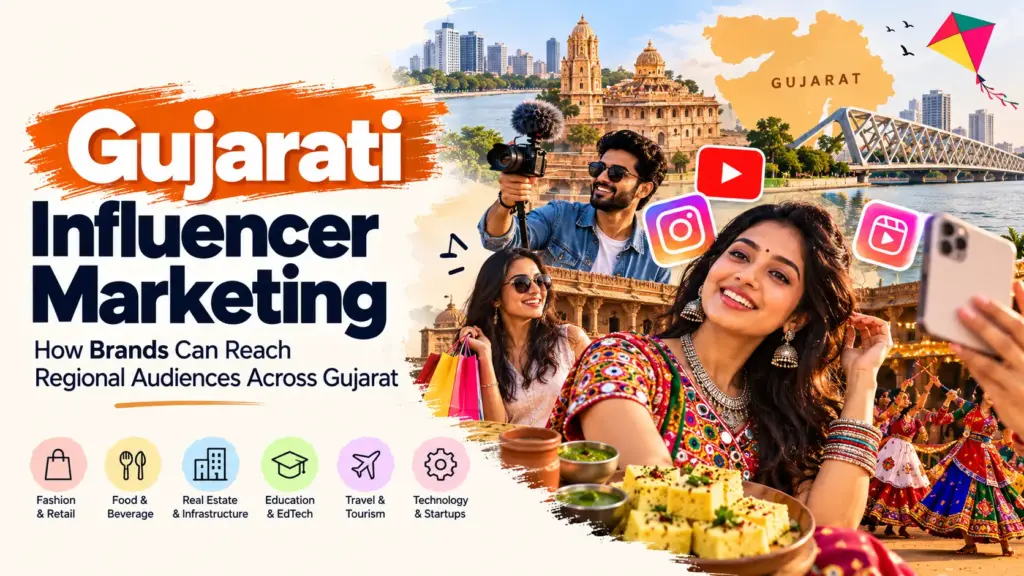
Gujarat has a diverse consumer market shaped by entrepreneurship, retail, fashion, food, technology, education, and local culture. For brands looking to reach customers across Ahmedabad, Surat, Vadodara, Rajkot, and other markets, creator-led content can help make product communication more relevant and relatable.
A successful campaign requires more than finding popular social media personalities. Brands need the right audience, suitable content formats, regional language preferences, and clear performance goals. Working with an experienced influencer marketing agency in Gujarat can help businesses plan campaigns around their target markets, creator requirements, and marketing objectives.
From Gujarati-language Instagram Reels to YouTube product reviews, user-generated content (UGC), and festive creator collaborations, regional influencer marketing gives brands multiple ways to start conversations with potential customers. The key is to build campaigns around genuine audience interests rather than simply adding local references to promotional content.
Consumers often engage with creators who understand their language, interests, lifestyle, and community. Regional creators can communicate product information in a familiar tone while helping brands make their messages relevant to specific audiences.
Several factors make regional creator campaigns worth considering:
Regional relevance does not mean every campaign must use Gujarati. A brand targeting young professionals may prefer a mix of Gujarati, Hindi, and English, while a local food or cultural campaign may benefit from a stronger Gujarati-language approach.
The effectiveness of a regional campaign depends on how naturally the creator communicates with their audience. A creator who regularly produces Gujarati lifestyle content may be a better fit for a local consumer brand than a larger creator whose audience has little connection with the campaign’s target market.
Brands should evaluate creators using several criteria:
A relevant creator partnership should feel natural to the audience. Overly scripted content, exaggerated claims, or forced regional references can weaken trust.
Ahmedabad offers opportunities for consumer brands, educational institutions, technology companies, fashion retailers, and real estate businesses. Campaigns can combine city-focused creators with niche experts who demonstrate products or explain services.
For example, an electronics brand could work with technology creators to demonstrate product features, while a retail brand might collaborate with fashion creators for a collection launch. Educational brands could use student creators and educators to explain course options and learning experiences.
For city-specific campaign information, explore this guide to the influencer marketing agency in Ahmedabad.
Surat’s textile and diamond industries create opportunities for visual storytelling around apparel, jewellery, styling, and lifestyle products. Fashion creators can produce outfit combinations, festive looks, product demonstrations, and shopping-focused videos.
Brands can also use short-form videos to show fabric details, styling options, collection launches, and behind-the-scenes production. The content should communicate genuine product features instead of relying entirely on promotional language.
Brands in Vadodara can explore collaborations with food creators, educators, wellness personalities, and local lifestyle influencers. A restaurant might use a creator visit to showcase its menu, while an education provider could publish informative content about courses, facilities, and student experiences.
For wellness campaigns, brands should ensure that health-related statements are accurate and that creators do not make unsupported medical claims.
Businesses in Rajkot and other Gujarat markets can use creator partnerships to introduce products, promote retail stores, support events, and build local awareness.
Nano and micro-influencers may be suitable for niche communities, but follower count alone should not determine selection. Brands should assess audience location, content relevance, engagement quality, and the campaign’s expected outcomes.
Fashion brands can work with creators on styling videos, seasonal collections, shopping guides, product try-ons, and occasion-based looks. Jewellery brands can use product-focused videos to showcase design details, styling ideas, and collection features.
Food creators can present restaurant experiences, local dishes, recipes, product demonstrations, and taste reviews. FMCG brands can use creator-led content to show how products fit into everyday routines.
Tech creators can produce unboxing videos, tutorials, comparisons, and practical demonstrations. Instagram Reels can introduce product highlights, while YouTube videos can explain features in greater depth.
Student creators, educators, and subject specialists can explain courses, demonstrate learning tools, and answer common questions. The most suitable format depends on whether the goal is awareness, engagement, or qualified enquiries.
Home tours, neighbourhood content, interior design ideas, and property walkthroughs can help audiences understand a project’s features. All property claims and specifications should be verified before publication.
Travel and lifestyle creators can showcase destinations, hotels, restaurants, local experiences, and events. Campaigns can combine creator videos with useful details such as location, activities, booking information, and visitor guidance.
Beauty creators can produce tutorials, routines, and product demonstrations, while fitness creators can share workout-related content and lifestyle tips. Brands must ensure claims are appropriate, substantiated, and compliant with relevant advertising rules.
Short-form video is useful for introducing products, demonstrating features, sharing quick tips, and presenting creator experiences. A clear opening, relevant message, and natural call to action can help viewers understand the value of the content.
Brands should test different creative approaches rather than assuming that one video format will work for every audience.
YouTube supports longer reviews, tutorials, product comparisons, interviews, and detailed demonstrations. It can be particularly useful when a purchase involves research or when customers need a deeper explanation before making a decision.
Smaller creators can help brands connect with specific communities and niche audiences. Their suitability depends on audience quality, content consistency, and commercial terms, not simply on their follower numbers.
A campaign can test several relevant creators before expanding the partnerships that meet its performance objectives.
UGC-style content includes product demonstrations, testimonials, unboxings, and customer-oriented videos. Brands can use these assets on social media, product pages, and paid campaigns when the relevant usage rights have been agreed upon.
UGC should not be presented as an independent customer review if it was commissioned or paid for without the appropriate disclosure.
AI tools can help teams organise creator research, develop content ideas, group audience insights, and prepare reporting summaries. Human review remains important for checking accuracy, cultural relevance, creator suitability, and brand tone.
AI-generated content should support the strategy rather than replace genuine audience understanding.
Brands increasingly need to understand what happens after content is published. Trackable links, unique discount codes, landing pages, and conversion events can help connect creator activity with website visits, leads, and sales.
The measurement plan should be decided before the campaign starts.
A structured process helps brands manage creator collaborations efficiently and evaluate whether their investment supports business objectives.
Step 1: Define the campaign goal. Decide whether the priority is awareness, engagement, website traffic, lead generation, sales, or content production.
Step 2: Identify the audience. Define the relevant customer segments, target cities, language preferences, interests, and buying considerations.
Step 3: Select the platform mix. Choose Instagram, YouTube, or other suitable platforms based on audience behaviour and content requirements.
Step 4: Build a creator shortlist. Evaluate creators using audience relevance, content quality, engagement signals, brand fit, and agreed commercial terms.
Step 5: Prepare the creative brief. Specify the message, deliverables, deadlines, required disclosures, approval process, and call to action. Allow creators enough freedom to communicate naturally.
Step 6: Launch and monitor. Coordinate publishing, track campaign links, check deliverables, and address any execution issues.
Step 7: Measure and improve. Review the agreed KPIs, identify effective content, and use the findings to guide the next campaign.
Brands planning this process can explore influencer marketing services for support with creator discovery, campaign coordination, and performance-focused execution.
Campaign performance should be measured against the objective rather than one universal benchmark.
| Objective | Metrics to monitor |
| Brand awareness | Reach, impressions, video views, audience distribution |
| Engagement | Comments, shares, saves, engagement rate |
| Website traffic | Link clicks, sessions, landing-page engagement |
| Lead generation | Form submissions, qualified leads, cost per lead |
| Sales | Tracked conversions, revenue, customer acquisition cost |
| Content production | Assets delivered, approval rate, usage rights |
Use UTM parameters, campaign-specific landing pages, discount codes, and analytics tools where appropriate. Review results in the context of campaign spend, creator fees, production costs, and the intended audience.
Avoid judging success by views alone. A campaign designed to generate qualified enquiries needs a different evaluation framework from a campaign designed to build awareness.
Brands planning regional campaigns need a clear process for identifying creators, coordinating content, managing deliverables, and reviewing results. InfluencerHai offers influencer marketing solutions for brands exploring regional and wider Indian audiences.
The campaign approach can be shaped around the target market, content format, industry, budget, and business objective. Brands may explore creators for Gujarati-language content, city-focused promotions, product demonstrations, or broader campaigns that extend beyond Gujarat.
You can explore the influencer directory to learn more about creator discovery and collaboration opportunities.
For brands planning to expand beyond one city, the strategy should balance regional relevance with consistent brand messaging. A campaign can begin with a defined audience segment, evaluate the results, and expand to other markets based on the evidence.
Gujarati influencer marketing gives brands a way to connect regional culture, relevant creators, and useful product communication. The strongest campaigns begin with a clear audience and objective, choose creators for their relevance rather than follower count alone, and measure results against meaningful business goals.
Whether a business wants to introduce a new product, promote a local experience, create UGC, or expand into additional Indian markets, a structured creator strategy can help it make more informed marketing decisions.
For brands looking to reach regional audiences and scale successful campaigns, top influencer marketing agency in India is a natural starting point to explore InfluencerHai’s broader influencer marketing solutions.
Tell us your goal. Our team will build the right creator or celebrity plan for your brand.



 250+